
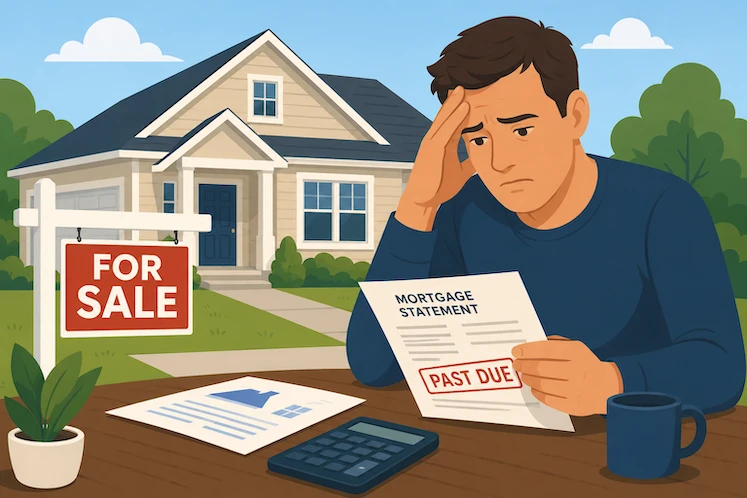
Falling behind on mortgage payments can feel overwhelming. Many homeowners worry that once they miss a payment—or several—they’ve lost control of their options. The good news is that being behind on your mortgage doesn’t automatically prevent you from selling your home.
In fact, many homeowners successfully sell their properties before foreclosure proceedings are completed. Whether you’re facing temporary financial difficulties, job loss, medical expenses, or rising monthly costs, selling your home may provide a practical path forward.
Understanding your options and acting quickly can make a significant difference in protecting your equity, avoiding foreclosure, and reducing financial stress.
Can You Legally Sell a House With Late Mortgage Payments?
Yes, you can sell a house even if you’re behind on your mortgage payments.
A mortgage lender cannot stop you from selling your property simply because you’ve missed payments. However, any outstanding mortgage balance, including late fees and penalties, must be paid from the proceeds of the sale at closing.
As long as the sale generates enough money to satisfy the mortgage debt and associated costs, the transaction can move forward normally.
The earlier you take action, the more flexibility you’ll typically have.
What Happens When You Fall Behind on Mortgage Payments?
Missing a payment doesn’t immediately result in foreclosure. Most lenders follow a process that unfolds over several months.
First Missed Payment
After your first missed payment, your lender will likely assess a late fee and begin contacting you regarding the overdue balance.
At this stage, your credit score may begin to suffer, but foreclosure is generally not imminent.
Multiple Missed Payments
If payments remain unpaid for several months, the lender may issue formal notices and begin the foreclosure process according to state laws.
This is often when homeowners begin exploring alternatives such as refinancing, loan modifications, or selling the property.
Pre-Foreclosure
Once a lender initiates foreclosure proceedings, the property enters what is commonly known as pre-foreclosure.
Many homeowners choose to sell during this period because they can still control the sale rather than allowing the lender to take possession of the property.
Why Selling Before Foreclosure Often Makes Sense
Selling before foreclosure can offer several important advantages.
Preserve Home Equity
If your property has appreciated in value, selling may allow you to access equity that would otherwise be lost through foreclosure-related costs.
Any remaining funds after paying off the mortgage and closing expenses belong to you.
Minimize Credit Damage
While late payments affect your credit, a foreclosure typically has a far more severe and long-lasting impact.
Selling before foreclosure can help reduce long-term financial consequences.
Reduce Stress and Uncertainty
Foreclosure proceedings can be stressful and time-consuming. A successful sale allows homeowners to move forward with greater certainty and financial clarity.
How Much Equity Do You Need to Sell?
One of the most important factors is the amount of equity you have in the property.
Positive Equity
If your home’s market value exceeds the amount owed on the mortgage, selling is generally straightforward.
For example:
| Item | Amount |
|---|---|
| Home Value | $400,000 |
| Mortgage Balance | $320,000 |
| Estimated Closing Costs | $20,000 |
| Remaining Equity | $60,000 |
In this scenario, the homeowner can sell the property, pay off the mortgage, cover closing costs, and keep the remaining equity.
Limited Equity
If equity is minimal, selling may still be possible, although proceeds may be reduced after commissions, taxes, and closing expenses.
Negative Equity
If you owe more than the property is worth, you may need to explore a short sale or negotiate directly with your lender.
Can You Sell During Pre-Foreclosure?
Yes.
Many homeowners successfully sell during pre-foreclosure. In fact, this is often one of the most effective ways to avoid a completed foreclosure.
Timing is critical because once a foreclosure auction occurs, your ability to sell the property independently may disappear.
If you’re behind on payments, speaking with a real estate professional or cash buyer sooner rather than later can help you understand available options.
Challenges That Can Affect the Sale
Every situation is unique, and some factors can make the process more complicated.
Unpermitted Work
Homeowners who have completed renovations without permits may face additional questions from buyers.
In these situations, understanding the implications of selling a home with unpermitted work can help you prepare for potential obstacles before listing the property.
Disclosure Requirements
Florida sellers must disclose known material defects and other important property information.
If you’re unsure what information should be provided to buyers, reviewing Fort Lauderdale’s requirements for home seller disclosures can provide useful insight into the disclosure process.
Property Condition Issues
Many homeowners behind on mortgage payments have delayed repairs due to financial constraints.
Fortunately, numerous buyers—including investors and cash buyers—purchase homes in as-is condition.
Should You List Traditionally or Sell to a Cash Buyer?
The right approach depends on your timeline, financial circumstances, and property condition.
Traditional Listing
A traditional sale may generate the highest selling price if:
-
The property is in good condition
-
You have time to wait for a buyer
-
Foreclosure deadlines are not immediate
-
The local market is favorable
However, traditional listings can take weeks or months to close.
Cash Home Buyers
Cash buyers often provide faster closings and fewer contingencies.
This option may be particularly attractive if:
-
Foreclosure deadlines are approaching
-
The property requires repairs
-
You need a quick sale
-
You want to avoid showings and inspections
If you’re considering this route, learning how to evaluate cash home buyers near you can help you identify reputable companies and avoid common mistakes.
Steps to Sell a House With Late Mortgage Payments
Step 1: Contact Your Lender
Understand exactly how much you owe, including:
-
Mortgage balance
-
Late fees
-
Interest charges
-
Legal fees (if applicable)
Request a payoff statement to obtain accurate figures.
Step 2: Determine Your Home’s Value
Knowing your property’s current market value helps you estimate available equity and determine whether selling is financially viable.
Step 3: Evaluate Your Timeline
Review any foreclosure notices or deadlines you have received.
The more time available, the more options you’ll likely have.
Step 4: Explore Selling Options
Compare:
-
Traditional real estate listings
-
Investor purchases
-
Cash buyer offers
-
Hybrid solutions
Each option offers different advantages depending on your goals.
Step 5: Complete the Sale
At closing, the mortgage balance is paid directly from the sale proceeds. Any remaining funds are then distributed according to the settlement statement.
Signs You Should Consider Selling Sooner Rather Than Later
While every homeowner’s situation is different, certain warning signs suggest immediate action may be beneficial:
-
Multiple missed mortgage payments
-
Collection notices from your lender
-
Foreclosure paperwork received
-
Mounting debt obligations
-
Reduced income or job loss
-
Major home repair expenses
-
Inability to catch up on payments
Waiting too long can limit your available options and reduce your negotiating power.
Frequently Asked Questions
Can I sell my house if I’m two or three months behind on payments?
Yes. Many homeowners sell properties while several months behind on mortgage payments. The outstanding balance is generally paid through the sale proceeds at closing.
Will my lender stop me from selling?
In most cases, no. Lenders typically prefer receiving repayment through a sale rather than pursuing foreclosure.
Can I sell my house after foreclosure has started?
Yes, in many situations you can still sell during pre-foreclosure. However, deadlines become increasingly important as the foreclosure process advances.
What if my home needs repairs?
You can still sell. Many investors and cash buyers purchase properties in as-is condition without requiring repairs.
Will selling eliminate my late payments?
The late payment history may remain on your credit report, but selling can prevent additional missed payments and may help you avoid the more serious consequences of foreclosure.
How quickly can a cash sale close?
Many cash transactions close within days or a few weeks, depending on title work and other factors.
Final Thoughts
Being behind on mortgage payments doesn’t mean you’ve run out of options. In many cases, selling your home before foreclosure can help preserve equity, reduce financial strain, and give you a fresh start.
The key is acting early. The longer you wait, the fewer options may remain available.
If you’re considering selling and want to understand what your property may be worth, you can Get A Free Estimate and explore your options before foreclosure becomes a larger issue.