
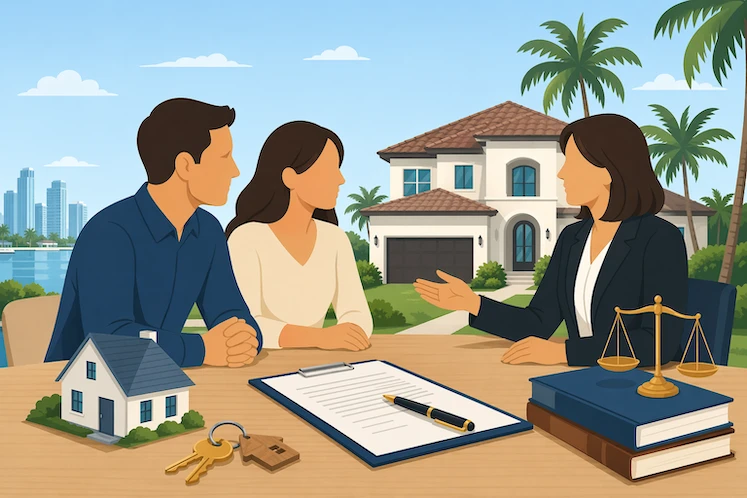
Selling a home in Florida can feel simple on the surface: list the property, accept an offer, sign the closing papers, and move on. But once contracts, title searches, disclosures, HOA rules, taxes, liens, inspections, and closing documents enter the picture, many sellers start asking the same question: do you need a real estate attorney to sell a home in Florida?
The short answer is no, Florida does not generally require every home seller to hire a real estate attorney for a standard residential sale. However, that does not mean legal guidance is never useful. In some situations, having an attorney can protect you from costly mistakes, delays, disputes, or contract terms that do not work in your favor.
Florida real estate sales involve legally binding documents, state disclosure rules, title requirements, and tax considerations. Sellers are also expected to disclose known material facts that affect the value of a residential property and are not readily observable to the buyer.
That means even if your sale seems straightforward, you still need to understand what you are signing and what you are responsible for.
Is a Real Estate Attorney Required to Sell a Home in Florida?
Florida does not require a seller to hire a real estate attorney for most residential real estate transactions. Many sellers complete sales with the help of a real estate agent, title company, escrow officer, or closing company.
That said, a real estate attorney can review contracts, explain legal obligations, help resolve title issues, negotiate special terms, and protect your interests when something unusual comes up.
This matters because the purchase agreement is not just paperwork. It controls deadlines, contingencies, deposits, inspection rights, closing costs, repairs, default terms, and what happens if the buyer or seller fails to perform.
What Does a Real Estate Attorney Do for a Florida Seller?
A real estate attorney’s job is to protect your legal position during the sale. While a real estate agent focuses on marketing, pricing, showings, negotiation, and transaction coordination, an attorney focuses on legal risk.
An attorney may help with:
Reviewing the Purchase Contract
A Florida home sale contract can include deadlines for inspections, financing, appraisal, title review, repairs, deposits, and closing. An attorney can explain what each section means before you sign.
This is especially helpful if the buyer requests unusual terms, seller financing, extended occupancy, repair credits, leasebacks, or early possession.
Resolving Title Problems
Title problems can delay or stop a closing. These may include unpaid liens, old mortgages that were never properly released, boundary disputes, probate issues, missing signatures, judgment liens, or errors in public records.
A title company can identify many issues, but an attorney can help resolve legal complications when the problem requires more than routine paperwork.
Explaining Seller Disclosure Duties
Florida sellers generally must disclose known facts that materially affect the value of residential real property and are not readily observable to buyers. This obligation applies even in “as-is” sales.
An attorney can help you understand whether a known issue should be disclosed and how to document it properly.
Handling Disputes Before Closing
Sometimes a buyer wants to cancel after inspection. Sometimes a seller disagrees with a repair demand. Sometimes a buyer misses a deadline or financing falls apart.
An attorney can help interpret the contract and explain your options before the dispute becomes expensive.
When Should You Consider Hiring a Real Estate Attorney?
Not every Florida home sale requires legal representation, but some situations make it a smart move.
You Are Selling During a Divorce
Divorce can complicate ownership, signatures, proceeds, court orders, and timing. If both spouses are on the deed or mortgage, the sale may need to follow divorce settlement terms.
For homeowners navigating property decisions while separating, selling during divorce can involve emotional, financial, and legal pressure at the same time.
An attorney can help clarify who has authority to sell, how proceeds should be handled, and whether court approval or additional documentation is needed.
The Property Has Liens or Title Issues
If your property has a contractor lien, tax lien, judgment, code enforcement lien, unpaid HOA balance, or unresolved mortgage issue, legal help may be worth it.
These issues can affect marketability of title. If they are not resolved before closing, the buyer may refuse to proceed or the title company may not insure the transaction.
You Inherited the Property
Inherited homes often involve probate, multiple heirs, personal representatives, or estate documents. If the estate was never properly handled, the seller may not have clear authority to transfer title.
An attorney can review whether probate is required and whether all necessary parties must sign.
You Are Selling a Condo or HOA Property
South Florida has many condominiums and HOA communities. These sales can involve association approvals, estoppel letters, special assessments, reserve requirements, rental restrictions, and governing documents.
A buyer may back out if the association has financial problems, pending litigation, major assessments, or restrictions that affect the buyer’s plans.
You Are Selling to a Cash Buyer
Cash sales are often faster because there is no lender approval process. Still, the contract matters. You need to understand the closing timeline, inspection period, proof of funds, deposit terms, and whether the buyer can assign the contract.
If speed is your top priority, a direct sale may help you sell your house ASAP without the delays of a traditional listing.
You Are Selling As-Is
An as-is sale does not erase disclosure duties. It generally means the seller does not agree to make repairs, but the seller may still need to disclose known hidden defects.
This is one of the biggest misunderstandings among Florida sellers. “As-is” does not mean “say nothing.”
Key Florida Seller Disclosures to Understand
Disclosure rules are one of the strongest reasons sellers ask about attorneys. You do not want to overcomplicate your sale, but you also do not want a buyer claiming later that you hid something important.
Material Defects
Florida’s disclosure rule comes from case law and requires sellers to disclose known facts that materially affect the property’s value and are not readily observable.
Examples may include roof leaks, plumbing problems, foundation issues, mold history, unpermitted work, structural damage, major electrical defects, or past flooding.
Flood Disclosure
Florida law now requires residential sellers to provide a flood disclosure to buyers at or before the sales contract is executed. The disclosure covers known flood damage during the seller’s ownership, flood insurance claims, and flood-related assistance from FEMA or other sources.
This is especially important in South Florida, where flood zones, storm surge, drainage, and insurance concerns can influence buyer decisions.
Radon Disclosure
Florida law also requires a radon disclosure statement at or before the contract for sale and purchase of any building. The Florida Department of Health provides the required language and explains that real estate transactions are an important opportunity for radon awareness.
Lead-Based Paint Disclosure
For homes built before 1978, federal lead-based paint disclosure rules may apply. Sellers typically must provide the required disclosure form and any known lead-based paint information.
This is another area where good paperwork helps reduce risk.
What Closing Costs and Taxes Should Florida Sellers Expect?
A real estate attorney is not always needed to explain every cost, but sellers should understand the financial side before accepting an offer.
Documentary Stamp Tax
Florida documentary stamp tax applies to documents that transfer an interest in Florida real property, including deeds. The tax is generally paid when the document is recorded.
For many Florida counties, the rate on deeds is 70 cents per $100, or fractional part of $100, of the consideration.
Title and Closing Fees
Depending on the county and contract terms, the seller may pay for owner’s title insurance, deed preparation, settlement fees, municipal lien searches, HOA estoppel fees, recording-related costs, and other closing expenses.
Because customs vary by county, South Florida sellers should review the contract carefully.
Mortgage Payoff
If you still have a mortgage, the closing agent will request a payoff statement. The remaining loan balance, interest, and applicable fees are paid from your sale proceeds at closing.
Capital Gains Considerations
A real estate attorney may not replace a tax professional, but legal and tax issues can overlap. If the home is an investment property, inherited property, second home, or high-appreciation property, speak with a qualified tax advisor before closing.
Attorney vs. Title Company vs. Real Estate Agent
Florida sellers often wonder who does what during the sale.
A real estate agent helps market the home, negotiate offers, coordinate showings, manage the transaction timeline, and communicate with buyers.
A title company handles title searches, title insurance, escrow, settlement statements, document coordination, and closing logistics.
A real estate attorney provides legal advice, reviews contracts, resolves legal disputes, drafts custom terms, and protects your rights if the transaction becomes complicated.
These roles can overlap, but they are not the same. A title company does not represent you as your personal attorney unless there is a formal attorney-client relationship.
Can You Sell a Florida Home Without a Realtor or Attorney?
Yes, it is possible to sell a Florida home without a Realtor or attorney. This is often called FSBO, or for sale by owner.
However, sellers who go this route take on more responsibility. You may need to handle pricing, marketing, buyer screening, disclosures, negotiations, contract forms, deadlines, inspection issues, and closing coordination.
That can work for some sellers, especially if the transaction is simple and the buyer is experienced. But if the property has legal complications, an attorney can help prevent costly errors.
What About Selling to a Cash Home Buyer?
Selling to a cash buyer can simplify the process because there is usually no mortgage lender, appraisal requirement, or loan underwriting delay. This can be helpful if the property needs repairs, the seller wants speed, or the home has been difficult to sell traditionally.
However, not all cash offers are the same. A serious cash buyer should be able to explain the timeline, closing process, proof of funds, fees, and contract terms clearly.
If you are deciding between listing the home and accepting a direct offer, a cash buyer comparison can help you weigh speed, certainty, price, and convenience.
For homeowners who want a direct starting point, you can get home estimate before deciding which selling path makes the most sense.
Pros of Hiring a Real Estate Attorney
Hiring an attorney can give you confidence when the sale involves risk.
An attorney can spot contract language that may hurt you, explain your obligations, help avoid disclosure mistakes, resolve title issues, and guide you through unusual circumstances.
This can be especially valuable in South Florida, where many properties involve condos, HOAs, flood zones, older homes, inherited ownership, investor buyers, and insurance-related concerns.
Cons of Hiring a Real Estate Attorney
The main downside is cost. Attorney fees vary depending on the complexity of the transaction, location, and scope of work.
For a clean, simple sale with standard documents and no legal complications, some sellers may decide they do not need separate legal representation.
The key is knowing when your sale is truly simple and when it has hidden risk.
Practical Steps Before You Sell Your Florida Home
Before listing or signing an offer, take time to organize the details that may affect the transaction.
Gather your deed, mortgage payoff information, HOA or condo documents, permits, warranties, repair records, insurance claims, tax information, and any notices from local government or associations.
Walk through the property and make a list of known issues. Do not rely on memory at the last minute. If something could materially affect the property’s value and is not obvious to a buyer, it may need to be disclosed.
Review your expected closing costs before accepting an offer. A high purchase price does not always mean the best net proceeds if the buyer asks for credits, repairs, concessions, or extended timelines.
Finally, compare your selling options. A traditional listing may bring strong market exposure, while a cash sale may offer speed and certainty. The right choice depends on your timeline, property condition, and financial goals.
Final Answer: Do You Need an Attorney?
You do not always need a real estate attorney to sell a home in Florida. Many standard residential sales close without one.
But if your sale involves divorce, inherited property, liens, title problems, HOA disputes, unusual contract terms, flood or disclosure concerns, or a buyer who wants special conditions, legal guidance can be a smart investment.
At minimum, every seller should understand the contract, required disclosures, closing costs, and timeline before signing. A smooth sale is not just about finding a buyer. It is about protecting your interests from offer to closing.
FAQ
Do I legally need a real estate attorney to sell a house in Florida?
In most standard Florida residential sales, no. Florida generally does not require sellers to hire a real estate attorney. However, an attorney may be helpful if the sale involves legal issues, title problems, disputes, inherited property, divorce, or unusual contract terms.
Can I sell my Florida home as-is without disclosing problems?
No. Selling as-is does not remove your duty to disclose known material defects that affect the property’s value and are not readily observable to the buyer.
Who handles closing if I do not hire an attorney?
A title company or closing company often handles the closing process, including title search, escrow, settlement statements, deed coordination, and recording. However, they may not provide personal legal advice unless they are also formally representing you.
When is hiring an attorney most important?
Consider hiring an attorney if the home has liens, probate issues, ownership disputes, HOA conflicts, code violations, unpermitted work, buyer disputes, or complex contract terms.
Do Florida sellers have to disclose flooding?
Yes. Florida law requires sellers of residential real property to complete and provide a flood disclosure at or before the sales contract is executed.
Is a cash sale safer than a traditional sale?
A cash sale can be faster and simpler because there is no lender underwriting process, but the contract still matters. Sellers should review the buyer’s proof of funds, inspection terms, deposit, closing timeline, and cancellation rights.