
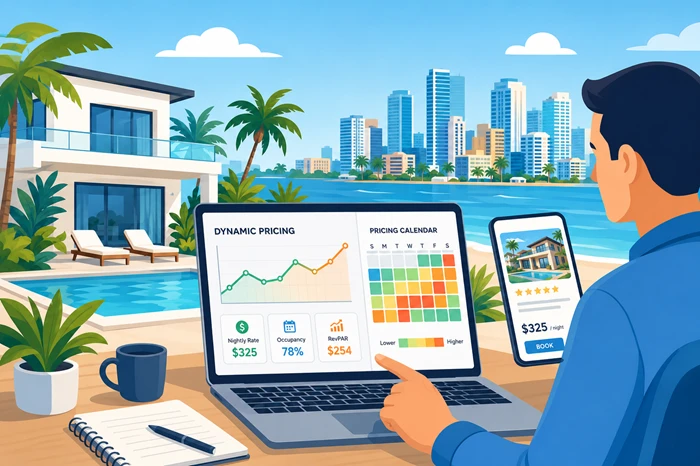
South Florida remains one of the most competitive and rewarding vacation rental markets in the United States. With year-round tourism, seasonal demand spikes, major events, and a steady stream of business travelers, hosts have a unique opportunity to increase earnings without simply raising rates across the board.
The secret is dynamic pricing.
Instead of setting a single nightly rate and hoping for consistent bookings, successful hosts adjust prices based on market demand, local events, occupancy trends, seasonality, and guest behavior. When done correctly, dynamic pricing helps maximize occupancy during slower periods while capturing higher revenue when demand surges.
In this guide, you’ll learn practical pricing strategies that can help increase booking income and improve overall profitability for your vacation rental.
What Is Dynamic Pricing?
Dynamic pricing is the practice of adjusting nightly rates in real time based on changing market conditions.
Hotels have used this strategy for decades. Today, vacation rental owners can apply the same principles to increase earnings and stay competitive in crowded markets.
Rather than charging the same amount every night, dynamic pricing considers factors such as:
- Seasonal demand
- Local events and festivals
- Occupancy rates
- Booking lead time
- Competitor pricing
- Market trends
- Day-of-week demand
By aligning pricing with actual demand, property owners can avoid leaving money on the table during peak periods and prevent vacancies during slower seasons.
Why Dynamic Pricing Matters in South Florida
South Florida experiences significant fluctuations in visitor demand throughout the year.
Winter attracts snowbirds escaping colder climates. Spring brings college travelers and families. Summer draws vacationers from around the country, while major events create short-term demand spikes that can dramatically affect nightly rates.
Hosts who rely on fixed pricing often miss these opportunities.
A well-executed pricing strategy allows property owners to respond quickly to market changes and optimize revenue throughout the year.
Understanding local regulations is equally important when operating a vacation rental. Staying informed about South Florida Airbnb rules can help hosts avoid compliance issues while focusing on revenue growth.
Analyze Seasonal Demand Patterns
Identify High and Low Seasons
One of the most effective pricing tactics is understanding when travelers are most likely to visit your area.
Peak demand periods in South Florida often include:
- Winter months
- Spring Break season
- Major holidays
- Long weekends
- Popular sporting events
- Music festivals and conventions
During these periods, travelers expect higher rates, making it possible to increase nightly pricing without hurting booking performance.
Create Seasonal Pricing Tiers
Instead of making constant manual adjustments, create pricing tiers based on historical demand.
Examples include:
- Peak season rates
- Shoulder season rates
- Off-season rates
- Holiday premium rates
This approach provides a solid pricing foundation while still allowing flexibility for market changes.
Monitor Competitor Pricing Daily
Your competition plays a major role in determining what guests are willing to pay.
Review comparable properties regularly and evaluate:
- Location
- Property size
- Amenities
- Guest ratings
- Occupancy trends
Look beyond simply matching competitor rates. Focus on understanding why certain listings command higher prices and what guests perceive as valuable.
Properties that offer unique experiences, upgraded interiors, or premium amenities often justify stronger nightly rates.
Hosts seeking to improve guest appeal can benefit from reviewing the latest trends in top luxury vacation rental features, which can significantly influence pricing power.
Adjust Rates Based on Booking Window
Increase Prices for Last-Minute Demand
Many travelers book accommodations close to their arrival date, particularly during busy periods.
If occupancy is already strong and demand remains high, increasing rates as availability decreases can help maximize revenue.
A nearly sold-out market often creates urgency among travelers, making them more willing to pay premium prices.
Offer Discounts for Early Bookings
Advance reservations provide predictable revenue and improve occupancy forecasting.
Consider offering modest discounts for guests who book several months ahead. Securing reservations early reduces uncertainty and helps fill your calendar before competitors.
Capitalize on Local Events
Major events create some of the most profitable opportunities for vacation rental owners.
South Florida hosts numerous high-demand events throughout the year, including:
- Art Basel
- Miami Open
- Boat shows
- Music festivals
- Professional sporting events
- International conferences
Demand can rise dramatically during these periods.
Create an annual event calendar and review local tourism schedules well in advance. Raising rates strategically before demand peaks allows you to capture additional revenue while remaining competitive.
Optimize Weekend and Weekday Pricing
Traveler behavior often differs between weekdays and weekends.
Leisure travelers typically prefer weekend stays, while business travelers may generate weekday demand in certain markets.
Analyze your booking history to identify patterns.
Common strategies include:
- Higher Friday and Saturday rates
- Midweek discounts during slower periods
- Special pricing for extended weekday stays
These adjustments help maximize occupancy without sacrificing profitability.
Use Minimum Stay Requirements Strategically
Pricing isn’t the only revenue lever available.
Minimum stay requirements can improve calendar efficiency and increase overall earnings.
Examples include:
Peak Season Restrictions
Require longer stays during holidays and high-demand periods to maximize booking value.
Gap-Filling Strategies
Reduce minimum stay requirements for isolated availability gaps that may otherwise remain vacant.
This technique helps generate revenue from nights that might go unbooked.
Leverage Dynamic Pricing Software
Manual pricing adjustments become increasingly difficult as market conditions change.
Modern pricing platforms analyze:
- Demand trends
- Competitor activity
- Occupancy levels
- Local events
- Historical performance
These tools can recommend optimal rates and automate adjustments based on predefined rules.
For owners managing multiple listings, automation can save significant time while improving revenue performance.
Many hosts also work with professionals specializing in vacation rental property management to combine technology with local market expertise.
Improve Listing Performance to Support Higher Rates
Dynamic pricing works best when supported by a strong listing.
Guests compare value before making reservations.
Invest in Professional Photography
High-quality images increase click-through rates and create stronger first impressions.
Professional photos often justify higher pricing because they showcase the property’s strengths effectively.
Maintain Exceptional Reviews
Positive guest feedback builds trust and supports premium pricing.
Focus on:
- Cleanliness
- Communication
- Check-in experience
- Amenities
- Accuracy of listing information
Consistently strong reviews can significantly improve conversion rates.
Update Amenities Regularly
Small improvements often produce measurable revenue gains.
Popular upgrades include:
- Smart home technology
- Fast Wi-Fi
- Outdoor entertainment areas
- Dedicated workspaces
- Premium bedding
These features help differentiate your property from competing listings.
Understand Market-Specific Pricing Trends
Every destination behaves differently.
What works in one market may not work in another.
Hosts operating an Airbnb should study local booking patterns and monitor tourism reports to identify emerging trends before competitors react.
Markets with strong international tourism may experience different booking windows compared to markets that primarily attract domestic travelers.
The more localized your pricing strategy becomes, the more effective it will be.
Avoid Common Dynamic Pricing Mistakes
Setting Rates Too High
Aggressive pricing can lead to lower occupancy and reduced overall revenue.
Monitor performance carefully and remain flexible.
Ignoring Market Data
Pricing decisions based solely on intuition often miss valuable opportunities.
Use historical performance and current market indicators whenever possible.
Failing to Update Rates
Market conditions change quickly.
Regular adjustments help maintain competitiveness and maximize earnings.
Overlooking Operational Costs
Higher revenue should not come at the expense of profitability.
Account for:
- Cleaning expenses
- Maintenance costs
- Platform fees
- Utilities
- Management expenses
A successful strategy balances revenue growth with healthy profit margins.
Long-Term Revenue Optimization
Dynamic pricing should be viewed as an ongoing process rather than a one-time adjustment.
The most successful hosts continuously:
- Analyze performance data
- Monitor local demand
- Test pricing strategies
- Evaluate guest behavior
- Refine occupancy goals
Over time, these improvements create a more predictable and profitable rental business.
Owners considering future exit strategies may also benefit from understanding the process of selling a vacation home in Florida, as strong revenue records can enhance property value.
Conclusion
Dynamic pricing has become one of the most effective ways to increase earnings in today’s competitive vacation rental market. By understanding demand patterns, tracking competitor activity, leveraging local events, optimizing booking windows, and continually refining pricing strategies, hosts can significantly improve profitability throughout the year.
Whether you’re managing a single vacation home or a growing portfolio, a data-driven approach to pricing can help unlock higher occupancy, stronger revenue, and long-term success in South Florida’s thriving vacation rental market.
Frequently Asked Questions
1. What is dynamic pricing for vacation rentals?
Dynamic pricing adjusts nightly rates based on demand, seasonality, and market conditions.
2. How often should vacation rental prices be updated?
Rates should be reviewed regularly, ideally daily or weekly depending on market activity.
3. Do local events affect vacation rental pricing?
Yes, major events often increase demand and allow for higher nightly rates.
4. Can dynamic pricing increase occupancy?
Yes, strategic pricing can help attract more bookings during slower periods.
5. Is dynamic pricing useful for small property owners?
Absolutely, even single-property owners can benefit from data-driven pricing strategies.