
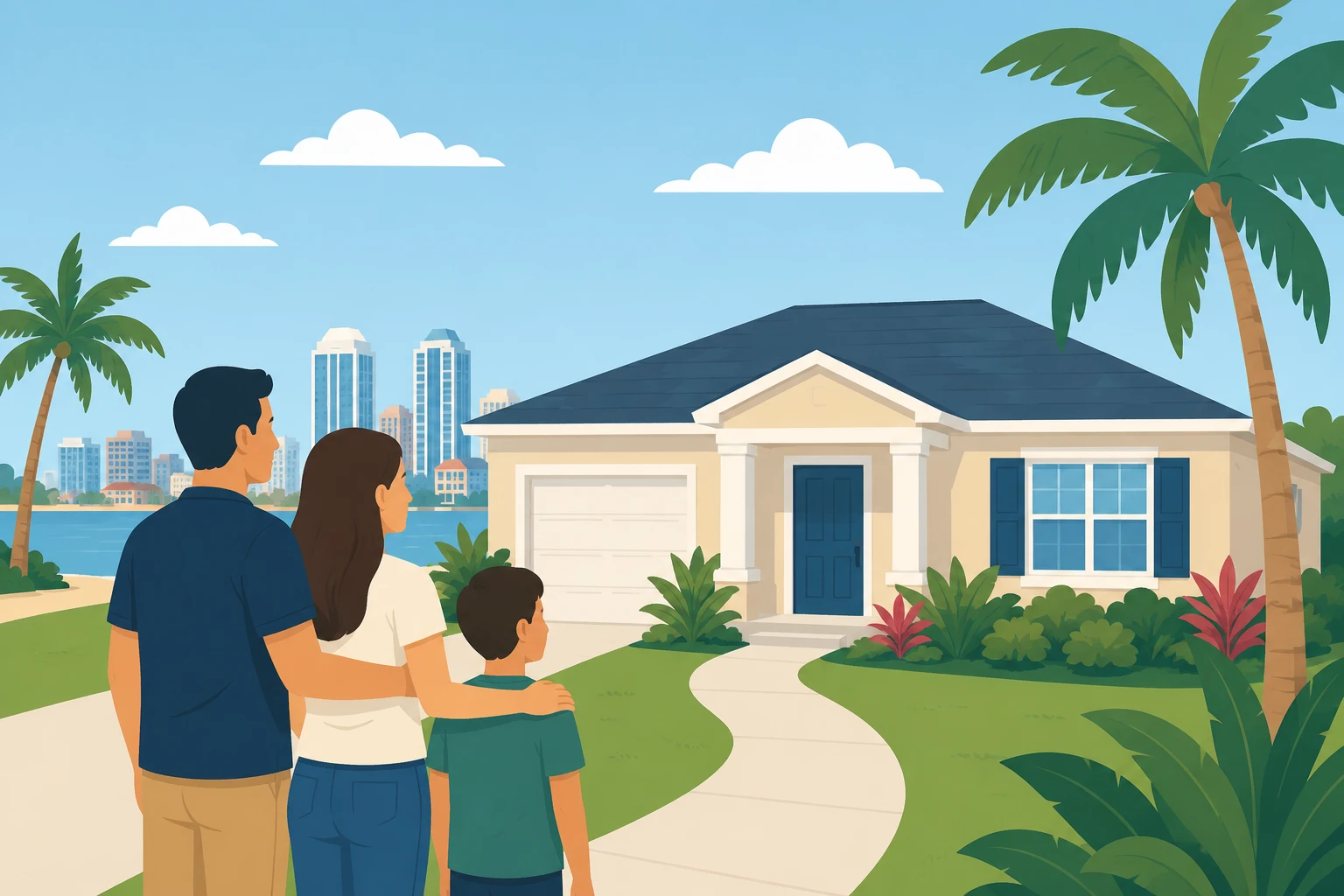
Buying a home in Florida can feel overwhelming, especially when home prices, insurance costs, and down payment requirements seem to keep rising. Fortunately, FHA loans continue to provide an accessible path to homeownership for many Floridians.
Whether you’re a first-time buyer, have less-than-perfect credit, or simply want a lower down payment option, FHA loans can make purchasing a home significantly more attainable.
In this guide, we’ll break down FHA loan requirements in Florida, explain the benefits, discuss potential drawbacks, and help you determine whether this financing option is right for you.
What Is an FHA Loan?
An FHA loan is a mortgage backed by the Federal Housing Administration (FHA). These loans are designed to help borrowers who may not qualify for conventional financing due to lower credit scores or limited savings.
Because the government insures the loan, lenders are often willing to offer more flexible qualification standards and lower down payment requirements.
FHA loans are available through approved mortgage lenders throughout Florida and can be used to purchase single-family homes, condominiums, townhomes, and certain multi-family properties.
Why FHA Loans Are Popular in Florida
Florida remains one of the most desirable states for homebuyers thanks to its warm climate, strong job market, and lack of state income tax.
However, rising property values have made it more challenging for many buyers to save for large down payments.
FHA loans help bridge that gap by offering:
-
Lower down payment requirements
-
Flexible credit standards
-
Competitive interest rates
-
Higher debt-to-income allowances
-
Assistance for first-time buyers
These benefits make FHA financing one of the most commonly used mortgage options across Florida.
FHA Loan Requirements in Florida
Before applying, it’s important to understand the qualification requirements.
Minimum Credit Score
Most borrowers need a credit score of at least 580 to qualify for the FHA’s minimum down payment option.
Borrowers with scores between 500 and 579 may still qualify, but they typically need a larger down payment.
Individual lenders may impose stricter requirements, so approval standards can vary.
Down Payment Requirements
One of the biggest advantages of FHA financing is the low down payment requirement.
Credit Score 580 or Higher
Borrowers can typically purchase a home with as little as 3.5% down.
For example:
-
$300,000 home purchase
-
3.5% down payment
-
$10,500 upfront investment
Credit Score Between 500 and 579
Borrowers generally need a 10% down payment.
While this is higher than the standard FHA requirement, it remains lower than many conventional loan scenarios.
Steady Employment and Income
Lenders want to see consistent income and employment history.
Most applicants should have:
-
Stable employment history
-
Reliable income source
-
Documentation such as W-2s, pay stubs, and tax returns
Self-employed borrowers can also qualify but may need additional documentation.
Debt-to-Income Ratio
Your debt-to-income (DTI) ratio measures how much of your monthly income goes toward debt obligations.
Most FHA lenders prefer:
-
Housing expenses below 31% of gross income
-
Total debts below 43% of gross income
Some borrowers may qualify with higher ratios depending on compensating factors.
Primary Residence Requirement
FHA loans are intended for owner-occupied properties.
You must live in the property as your primary residence after closing.
These loans generally cannot be used for vacation homes or investment properties.
FHA Loan Limits in Florida
The FHA sets maximum loan amounts that vary by county.
Loan limits are generally higher in areas with elevated housing costs and lower in more affordable regions.
Because limits change periodically, buyers should verify current limits with an approved lender before starting their home search.
Key Benefits of FHA Loans in Florida
Lower Down Payment
Saving for a large down payment is one of the biggest barriers to homeownership.
FHA loans reduce that burden substantially.
Instead of waiting years to save 20%, many buyers can enter the market sooner with only 3.5% down.
Easier Credit Requirements
Many conventional loans require stronger credit profiles.
FHA financing gives borrowers with moderate credit scores a realistic opportunity to purchase a home.
This flexibility can be especially valuable for buyers recovering from past financial challenges.
Competitive Interest Rates
Because FHA loans are government-backed, lenders often offer attractive interest rates.
Even a small reduction in interest rates can lead to significant long-term savings.
Gift Funds Allowed
Family members can contribute toward your down payment and closing costs.
This feature helps many first-time buyers reach homeownership sooner.
Assumable Loans
An often-overlooked benefit is loan assumability.
Future buyers may be able to assume your FHA mortgage under certain conditions.
If interest rates rise significantly in the future, this feature could make your property more attractive when selling.
Potential Drawbacks of FHA Loans
While FHA loans offer many advantages, they are not perfect for every buyer.
Mortgage Insurance Premiums
FHA borrowers are required to pay mortgage insurance premiums (MIP).
These include:
-
Upfront mortgage insurance premium
-
Annual mortgage insurance premium
These costs increase the overall expense of the loan compared to some conventional financing options.
Property Condition Requirements
Homes financed with FHA loans must meet specific safety and habitability standards.
If a property needs substantial repairs, additional work may be required before closing.
Loan Limits
Buyers seeking luxury properties or homes in higher price ranges may find FHA loan limits restrictive.
In those situations, conventional or jumbo financing may be more appropriate.
FHA Loans vs. Conventional Loans
FHA Loans
Best for:
-
First-time homebuyers
-
Buyers with limited savings
-
Borrowers with moderate credit scores
-
Individuals seeking flexible qualification standards
Conventional Loans
Best for:
-
Borrowers with excellent credit
-
Buyers with larger down payments
-
Homeowners seeking to avoid mortgage insurance
Choosing between FHA and conventional financing depends on your financial situation and long-term goals.
Tips for Getting Approved for an FHA Loan
Improve Your Credit Score
Pay bills on time, reduce credit card balances, and avoid opening unnecessary accounts before applying.
Even small score improvements can increase financing options.
Save for Closing Costs
Although FHA loans require smaller down payments, buyers still need funds for:
-
Closing costs
-
Appraisal fees
-
Inspections
-
Insurance premiums
Preparing early helps avoid surprises.
Reduce Existing Debt
Paying down credit cards and personal loans can improve your debt-to-income ratio and strengthen your application.
Get Pre-Approved
Pre-approval gives you a realistic understanding of your budget and demonstrates credibility when making offers.
Florida Housing Markets Where FHA Loans Are Common
FHA loans are frequently used throughout Florida, particularly in markets where first-time buyers and relocating families are active.
Cities such as Orlando, Tampa, Jacksonville, and Fort Lauderdale continue to see strong FHA loan activity due to affordability challenges and population growth.
Those planning to list properties in Palm Beach County may find valuable information in this Boca Raton listing guide.
Is an FHA Loan Right for You?
An FHA loan may be a great fit if:
-
You have limited savings
-
Your credit score is below conventional loan standards
-
You’re purchasing your first home
-
You want a lower down payment option
-
You need flexible qualification requirements
However, borrowers with strong credit and substantial savings may benefit from comparing conventional loan options before making a final decision.
Speaking with multiple lenders and reviewing available programs can help you identify the best financing solution.
Frequently Asked Questions
What is the minimum down payment for an FHA loan in Florida?
Most borrowers with a credit score of 580 or higher can qualify with a 3.5% down payment.
Can first-time homebuyers use FHA loans?
Yes. FHA loans are extremely popular among first-time buyers, although previous homeowners may also qualify.
Do FHA loans require mortgage insurance?
Yes. FHA loans require both upfront and annual mortgage insurance premiums.
Can I buy a condo with an FHA loan?
Yes, provided the condo and community meet FHA approval requirements.
Can self-employed borrowers qualify?
Yes. Self-employed applicants can qualify if they provide sufficient income documentation and meet lender requirements.
Are FHA loans only for low-income buyers?
No. FHA loans are available to qualified borrowers across a wide range of income levels.
Final Thoughts
FHA loans continue to play an important role in helping Floridians achieve homeownership. With lower down payment requirements, flexible credit standards, and competitive financing options, these loans can open doors for buyers who may struggle to qualify for conventional mortgages.
Whether you’re purchasing your first home or exploring financing alternatives, understanding FHA requirements and benefits can help you make a confident decision.
If you’re considering selling a property before purchasing your next home, you can always get cash offer and explore your available options.