
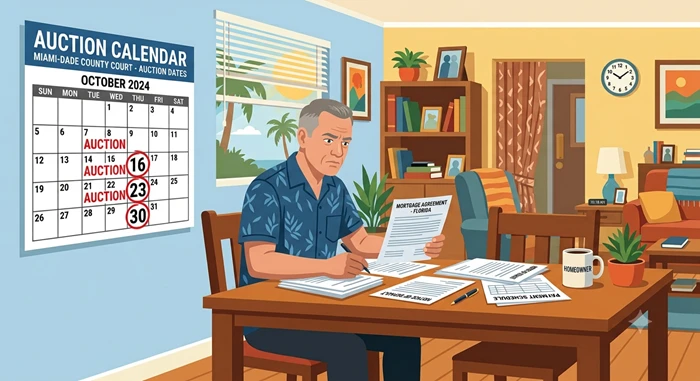
Falling behind on mortgage payments can make the situation feel urgent, especially when an auction date has already been set. The good news is that homeowners may still have several options depending on where the case stands, the amount owed, available equity, and whether the lender is willing to negotiate. Understanding your choices early can give you more control over what happens next.
Key Takeaways
-
Review your court papers and auction date immediately.
-
Contact your mortgage servicer to discuss available loss-mitigation options.
-
Consider selling the property if keeping it is no longer financially realistic.
-
Get qualified legal or financial guidance before signing anything under pressure.
Can You Stop Foreclosure Before the Auction?
Yes, in some circumstances, a foreclosure sale can be stopped or delayed, but the available options depend heavily on the stage of the case.
Florida uses a judicial foreclosure process, meaning the lender generally goes through the court system to obtain a judgment and proceed toward a sale. Under Florida law, the final judgment directs the clerk to conduct a public sale, and the timing and procedures are governed by statute and the court’s orders.
Once an auction date has been scheduled, time becomes especially important. Do not assume that ignoring letters, court notices, or calls from the lender will make the problem disappear.
Instead, determine exactly what has happened and identify which solution is still practical.
1. Contact Your Mortgage Servicer Immediately
One of the first steps is to speak directly with your mortgage servicer. Explain your financial situation and ask what loss-mitigation programs may be available.
Depending on your circumstances, possibilities may include a repayment arrangement, loan modification, forbearance, or another workout option. Eligibility varies, so ask the servicer to explain the requirements in writing.
Gather your income information, bank statements, monthly expenses, tax documents, mortgage statements, and other financial records before making the call. Having accurate information can make the conversation much more productive.
If a solution is offered, carefully review the terms before accepting it. A temporary payment reduction may help in the short term but may not solve the underlying affordability problem.
2. Find Out Exactly Where Your Case Stands
A homeowner facing an upcoming auction should know more than just the sale date.
Review the foreclosure complaint, final judgment, notices, and any subsequent court documents. Check whether the sale has actually been scheduled and whether any hearings, motions, agreements, or other deadlines are pending.
Florida’s judicial-sale rules provide specific requirements concerning the judgment and notice of sale. The court may also have authority to enlarge the time of the sale in appropriate circumstances.
Because foreclosure procedures can be complicated, consider speaking with a Florida foreclosure attorney about your specific case. A lawyer can review the court record and explain whether there are procedural, financial, or settlement options worth pursuing.
3. Ask About Mediation or Negotiated Resolution
Another possible route is negotiating directly with the lender or exploring mediation.
Mediation gives disputing parties an opportunity to communicate with the help of a neutral mediator. The mediator does not decide who wins and does not provide legal advice; instead, the process is designed to help the parties explore mutually acceptable solutions.
A negotiated agreement might involve a payment arrangement, loan workout, settlement, or another resolution acceptable to both sides.
The key is to start the conversation before the auction whenever possible. A lender may have fewer practical options once the sale has already occurred.
4. Consider Selling the Home Before the Auction
For some homeowners, selling the property is a more realistic solution than trying to keep an unaffordable mortgage.
If the home has enough equity, a traditional sale may allow you to pay off the mortgage, resolve other liens, cover selling costs, and potentially retain remaining proceeds.
In a situation where you need a faster solution, you may also explore whether a local home-buying company can make an offer based on the property’s condition and circumstances. Homeowners who want to explore their options can learn more about how to sell your house fast before the situation reaches the auction stage.
A fast sale is not automatically the best choice, however. Compare the offer with the property’s realistic market value, understand all fees and terms, and never sign documents you do not understand.
5. Understand the South Florida Market Before Pricing Your Home
Selling quickly does not mean pricing blindly.
The local value of a property depends on factors such as neighborhood, condition, property type, comparable sales, demand, repairs, liens, and the amount still owed on the mortgage.
Understanding the current south florida real estate market can help you determine whether a conventional listing, investor offer, or another strategy makes the most sense.
When considering selling and relocating to another Florida home, it’s also important to understand South Florida’s 3-year rule, which may affect your ability to transfer eligible Save Our Homes portability benefits to a new homestead.
A homeowner should also calculate the approximate payoff amount rather than relying only on the outstanding balance shown on an old statement. Interest, legal expenses, fees, and other charges may affect the amount needed to resolve the loan.
6. Know the Difference Between Selling and a Short Sale
If the property is worth less than the total amount needed to satisfy the mortgage and other secured debts, a regular sale may not produce enough money to pay everything owed.
In that situation, a short sale may be worth discussing with the lender.
A short sale generally requires the lender or relevant lienholders to approve accepting less than the amount owed. It is not something a homeowner should assume will happen automatically.
Ask the lender about its requirements, required documentation, approval process, and how any remaining balance will be handled.
Professional advice can be particularly important because the financial and tax consequences may vary from one situation to another.
7. Do Not Wait Until the Last Week
One of the biggest mistakes homeowners make is waiting until the auction is only days away.
A potential buyer needs time to evaluate the property, make an offer, complete inspections or due diligence, arrange financing or funds, and close. The lender also needs time to receive and process payoff information.
If a homeowner is already facing foreclosure, starting the process early can create more choices.
The closer the auction gets, the fewer realistic options may remain.
8. Learn How the Auction Deadline Affects Your Choices
Florida law provides that, in certain judicial sales, the final judgment directs the clerk to sell the property on a specified date. The statute generally provides for a sale date no sooner than 20 days and no later than 35 days after the final judgment, although the law allows certain variations.
Florida also provides a statutory right of redemption in certain circumstances before the later of the filing of the certificate of sale or the deadline specified in the judgment, allowing the borrower to cure the indebtedness by meeting the statutory requirements.
These rules are technical, and the exact position of a particular homeowner can depend on the court’s judgment and the facts of the case.
That is why an auction date should be treated as a serious legal deadline rather than a date that can simply be ignored.
9. Protect Yourself From Foreclosure Scams
Financial distress creates opportunities for dishonest operators.
Be cautious if someone promises to guarantee that the foreclosure will disappear, asks you to transfer your deed immediately, demands large upfront fees, or tells you to stop communicating with your lender or attorney.
Do not sign over ownership simply because someone promises to let you remain in the home.
Florida’s foreclosure-sale statute itself warns property owners to carefully review documents involving potential surplus funds and to seek independent legal advice when necessary.
If someone offers to buy your property, compare the terms carefully and make sure you understand exactly what you are signing.
10. Review Your Options If Bankruptcy Is Part of the Situation
Bankruptcy can sometimes affect collection activity and the timing of a foreclosure, but it is a major legal decision and should not be treated as a quick foreclosure fix.
The right approach depends on income, debts, assets, mortgage status, eligibility, and long-term financial goals.
If bankruptcy is already part of your circumstances, researching how to sell a house after bankruptcy in Florida can help you understand some of the issues that may need to be considered before pursuing a property sale.
Always obtain advice from a qualified bankruptcy or foreclosure professional before making a decision based solely on a general online article.
What About Foreclosed Properties in South Florida?
The foreclosure process affects both homeowners and buyers.
People searching for houses for foreclosure in florida may see properties at different stages, including homes where a foreclosure case has been filed, properties approaching a sale, or homes that have already gone through a completed sale.
That does not mean every distressed property is available for a conventional purchase.
The legal status of the property, title, liens, court orders, occupancy, and sale conditions all matter. Anyone considering purchasing a distressed property should perform appropriate due diligence.
For homeowners, the more important lesson is that the word “foreclosure” does not necessarily mean the home has already been lost.
The stage of the case matters.
Why Professional Guidance Can Make a Difference
Foreclosure involves legal deadlines, financial calculations, property rights, and potentially significant consequences for your credit and finances.
A real estate professional can help evaluate selling options and property value. A mortgage professional can explain available workout programs. An attorney can address legal questions involving the case, judgment, defenses, agreements, or deadlines.
For a homeowner trying to decide whether to keep, sell, negotiate, or pursue another solution, getting the right information early can prevent costly mistakes.
This is particularly important in south florida real estate, where property values and selling conditions can vary significantly from one neighborhood to another.
For a broader explanation of how foreclosure works in South Florida, reviewing the complete process can also help homeowners understand where their case may fit.
A Practical Action Plan Before Your Auction Date
If your property has an upcoming sale date, focus on the next few actions rather than trying to solve everything at once.
Today
Review every foreclosure document you have received and confirm the scheduled auction date.
Contact your mortgage servicer and ask for the current payoff amount, loss-mitigation options, and the status of the account.
Within the Next Few Days
Speak with a qualified foreclosure attorney if you have questions about the lawsuit, judgment, sale date, or available legal options.
At the same time, determine your property’s realistic value and estimate how much equity may be available after the mortgage and selling costs are considered.
Before Making a Decision
Compare the realistic cost of keeping the home with the potential outcome of selling it.
If selling appears to be the most practical solution, move quickly enough to allow time for negotiations, paperwork, title work, and closing.
Final Thoughts
An upcoming foreclosure auction does not mean you should give up or stop looking for solutions.
The most important step is to understand exactly where your case stands and then act quickly. Depending on your circumstances, negotiating with the lender, seeking mediation, selling the property, pursuing a short sale, or exploring other legal options may provide a path forward.
For homeowners considering their alternatives, working with experienced south florida real estate investors may provide another perspective on selling a distressed property, particularly when speed and certainty are important.
Do not wait for the auction date to force the decision for you. The earlier you understand your numbers, legal position, and available choices, the more control you may have over the outcome.
Frequently Asked Questions
Can a foreclosure auction be stopped in Florida?
Potentially, depending on the case stage, lender agreement, court orders, and whether the homeowner can cure the debt or reach another resolution.
Can I sell my home before a foreclosure auction?
Yes, a homeowner may be able to sell before the auction, subject to the mortgage payoff, liens, title requirements, and applicable court procedures.
What happens if my home is worth less than I owe?
You may need to discuss a short sale or another negotiated resolution with the lender.
Is it too late to act after an auction date is scheduled?
Not necessarily, but the available time is limited, so professional advice and immediate action are important.
Should I hire a foreclosure attorney?
If you have legal questions about the lawsuit, judgment, deadlines, or potential defenses, consulting a qualified Florida foreclosure attorney is strongly advisable.