
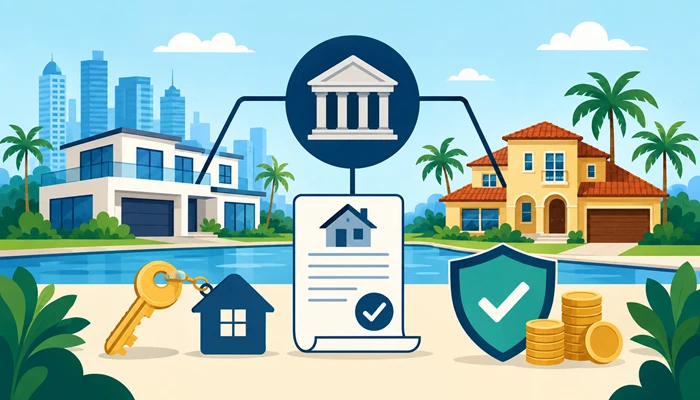
Buying or selling property in South Florida can involve more than a simple mortgage on one home. Some borrowers use multiple properties to support one or more loans, creating a structure that can affect financing, refinancing, and the ability to sell a property. Understanding cross collateralization before signing loan documents can help buyers and sellers avoid surprises and make better decisions.
Key Takeaway
-
Cross collateralization can connect multiple properties to the same debt.
-
Selling one property may require lender approval or a loan restructure.
-
Buyers should understand the lien and repayment terms before closing.
-
Sellers should review their loan documents early if multiple properties are involved.
What Is This Mortgage Structure?
Mortgage cross collateralization is a lending arrangement where more than one asset secures a loan or group of obligations. Instead of one property standing alone as collateral, a lender may have rights tied to several properties owned by the borrower.
In South Florida, this can matter to investors, homeowners with multiple properties, and buyers using creative financing. A lender may evaluate the combined value, existing debt, and overall risk rather than looking at each property in isolation.
How Cross Collateralization Works
Imagine an investor owns two homes. Property A has substantial equity, while Property B is being purchased with financing. A lender may agree to use both properties to secure the borrowing.
If the loan documents create cross collateralization, the lender may have a security interest in both properties. The borrower therefore cannot always treat the properties as completely separate when making financial decisions.
The exact rights depend on the promissory note, mortgage, security agreement, and other closing documents. Some arrangements may allow a property to be released after certain conditions are met, while others may require a partial payoff or additional collateral.
Why Lenders Use This Structure
Cross collateralization lenders may use this approach to reduce risk. If one property declines in value, another asset may continue supporting the loan.
It can also help a borrower qualify for financing by combining equity or borrowing capacity across properties. For some investors, that flexibility can make a purchase possible when a conventional single-property loan would not provide enough support.
What Borrowers Give Up
The trade-off is flexibility. When several properties support the same debt, selling or refinancing one asset may require the lender to review the entire arrangement.
That means a borrower should not assume that paying off the mortgage associated with one property automatically removes the lender’s interest in every related obligation.
Why It Matters When Buying in South Florida
South Florida’s property market includes primary residences, second homes, investment properties, and rental real estate. That broader Florida real estate market can include buyers with very different financing needs.
Buyers who already own property may be tempted to use existing equity to strengthen a new financing package. A mortgage calculator can help estimate payments, but it cannot explain the legal relationship between properties securing a loan.
Buyers should also compare the loan structure with current mortgage rates and consider whether the added flexibility is worth the additional restrictions.
Questions Buyers Should Ask
Before signing, ask the lender:
-
Which properties secure the loan?
-
Can one property be sold without paying off the entire balance?
-
What conditions are required for a collateral release?
-
Is there a prepayment penalty?
-
Does refinancing one property require lender approval?
-
What happens if the value of one property falls?
Getting clear answers in writing is far safer than relying on a verbal explanation.
Selling a Property With Multiple Assets Tied to Debt
Selling can become the most important point of concern. A homeowner may find a buyer and agree on a price, only to learn that the lender requires additional money or documentation before releasing its lien.
This is why sellers should review their financing before listing a property. If the debt is secured by more than one asset, the sale proceeds may not automatically be enough to release the property.
For homeowners who need to sell quickly, sell your house fast may be one option to explore, especially when timing or property condition makes a traditional listing less attractive.
However, speed should not replace careful review of the loan. Sellers still need to know exactly what the lender requires before closing.
Can You Sell One Property Without Paying Everything?
The answer depends on the loan documents and the lender’s release requirements. Some lenders may agree to release one property if the borrower makes a partial payment, maintains sufficient collateral, or satisfies another condition.
Others may require the entire loan to be paid off before releasing the property. This can affect the seller’s expected net proceeds and should be addressed before accepting an offer.
If missed payments are also involved, homeowners may want to understand can you sell a house with late mortgage payments before deciding on their next step.
Early communication can give a seller more time to negotiate with the lender, gather payoff information, and determine whether the transaction is financially workable.
Interest Rates and South Florida Mortgage Decisions
Financing decisions are rarely made in isolation. Changes in borrowing costs can affect buyer demand, monthly payments, property values, and the seller’s expectations.
When multiple properties are involved, rate changes can have a wider effect because the borrower may be managing more than one asset and one connected debt obligation.
How Interest Rates Impact Florida Home Sellers
Mortgage rates can influence how much buyers are willing to spend, which can directly affect pricing, demand, and the time a property stays on the market. Sellers dealing with multiple properties or complex financing should consider these factors before deciding when to list.
For a closer look at the connection between borrowing costs and seller decisions, read about how interest rates impact florida home sellers. Understanding the market environment can help sellers set realistic expectations and plan their next financial move.
How Rising Interest Rates Affect Home Buyers
Higher borrowing costs can change a buyer’s purchasing power even when property prices remain stable. A higher monthly mortgage payment may cause buyers to reduce their budget, delay a purchase, or look for different financing options.
Buyers considering properties connected through multiple forms of collateral should also understand how rising interest rates are affecting home buyers. This can provide useful context when evaluating affordability and the long-term cost of a mortgage.
Risks to Watch Before Signing
The biggest concern is often not the concept itself but failing to understand its consequences.
Limited Selling Flexibility
A borrower may want to sell one property to raise cash, reduce debt, or move to another investment. If the property secures a broader loan, the lender may control how and when it can be released.
Equity Exposure
The arrangement can put equity in multiple properties at risk. If the borrower defaults, the lender’s rights may extend beyond the property that originally seemed to be the main source of security.
Refinancing Complications
Refinancing can become harder when several assets are tied together. A new lender may need to understand existing liens and determine how they will be removed or subordinated.
How to Prepare Before Buying or Selling
The best time to investigate the loan structure is before a contract is signed.
Start by obtaining copies of the mortgage, note, and any related security documents. Ask the lender for a written payoff and release procedure for each property involved.
Next, review the property’s equity position and your total debt. If the arrangement is complex, consider having a qualified real estate attorney or financial professional review the documents.
It is also important to understand collateralization language and how it interacts with your specific obligations. A general explanation online cannot replace a review of the actual loan documents.
If financial distress or missed payments are part of the situation, learning how foreclosure works in South Florida can help you understand the broader timeline and potential consequences.
Final Thoughts
Cross collateralization can be a practical financing tool, but it changes the relationship between your properties and your debt. A decision that looks simple at closing can become more complicated when you later try to sell, refinance, or restructure a loan.
For South Florida buyers and sellers, the safest approach is to understand the documents before committing. Ask how each property is secured, what happens when one property is sold, and how much money or collateral the lender will require for a release.
Frequently Asked Questions
What does cross collateralization mean?
It means multiple assets are used to secure the same loan or related debt.
Can I sell a property under cross collateralization?
Yes, but the lender may require a partial payoff or other conditions before releasing the property.
Does cross collateralization affect refinancing?
It can, because refinancing one property may require changes to the broader loan and collateral arrangement.
Is cross collateralization risky for homeowners?
It can increase exposure because more than one property may secure the borrower’s obligations.
Should I review the loan before selling?
Yes, reviewing the loan documents and release requirements early can prevent closing delays and unexpected costs.