
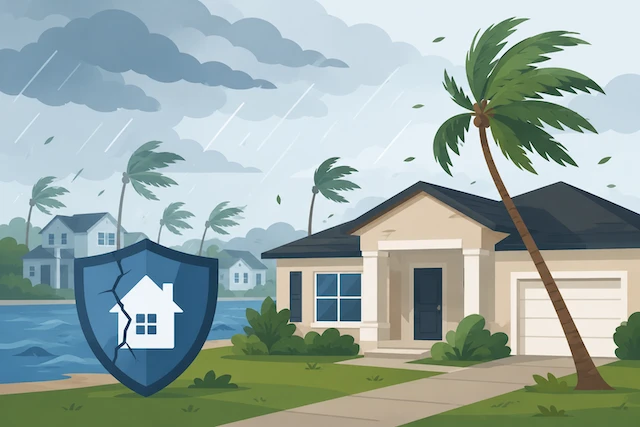
If you own a home in Florida, you have felt the sting of rising insurance premiums. Maybe your annual premium jumped by thousands of dollars with no explanation. Maybe your carrier dropped you outright, and the only quotes you could find were double what you paid last year. Or maybe you are reading this because the cost of keeping your home insured has become hard to justify.
You are not alone, and you are not imagining things. Florida’s homeowner insurance market has been under severe strain for several years running. Rates have climbed faster here than in any other state, dozens of insurers have pulled out of the market, and homeowners caught in the middle are being forced to make difficult decisions about what to do with their property.
For many, that decision leads to selling. If you are wondering whether rising insurance costs mean it is time to let your home go, here is what you need to understand about the crisis, how it affects your home’s value, and what options you actually have.
How Bad Is the Florida Insurance Market?
The numbers tell a stark story. Florida homeowners now pay an average of more than three times the national average for property insurance. In some coastal areas, premiums have increased 200 to 400 percent over the past five years. Meanwhile, several major insurers have either stopped writing new policies in Florida or have gone insolvent entirely.
This has created a situation where homeowners are paying dramatically more for significantly less coverage. Policy terms have tightened, deductibles have risen, and coverage exclusions have become more common. Even homeowners who have never filed a claim are seeing their rates climb because the risk pool across the state has become more expensive to insure.
Why Are Insurance Rates So High in Florida?
Several factors have converged to create the current crisis.
Hurricane risk. Florida is the most hurricane-prone state in the country. Every storm season brings the potential for catastrophic losses, and insurers price that exposure into every premium. Recent active seasons have resulted in billions of dollars in claims, which get spread across the entire market.
Reinsurance costs. Insurance companies buy their own insurance – called reinsurance – to protect themselves against large losses. The cost of reinsurance has risen sharply in recent years, and those costs are passed directly to homeowners.
Litigation and assignment of benefits abuse. Florida has historically been a hotspot for property insurance litigation. Although recent legislative reforms have started to address the issue, the financial impact of years of litigation-driven losses is still working its way through the system.
Insurer insolvencies. When insurance companies go bankrupt, the remaining insurers in the market must absorb the cost through assessments and higher rates. Several Florida insurers have failed in the last few years, compounding the pressure on everyone who remains.
How Rising Insurance Costs Affect Home Sellers
If you are planning to sell your home – or even just considering it – insurance costs play a bigger role in the process than most homeowners realize.
Your Home May Be Harder to Sell
Buyers today are savvier about ongoing costs than they were a few years ago. When a potential buyer sees that homeowner insurance on a property costs five hundred dollars a month or more, it changes their calculation. High insurance premiums can reduce the pool of qualified buyers willing to make an offer, especially for first-time buyers who are already stretching their budgets.
Buyers May Request Concessions
In a market where insurance costs are top of mind, buyers may ask for price reductions or closing cost assistance to offset the long-term expense of insuring the home. If you are already in a tight margin situation, these requests can make a traditional sale even less attractive.
Your Monthly Carrying Costs Are Unsustainable
For homeowners who are not planning to sell, rising insurance premiums still pose a problem. When your monthly expenses climb faster than your income, the carrying costs of the home become harder to manage. Mortgage payments, property taxes, maintenance, and insurance all add up – and when insurance alone jumps by several thousand dollars a year, that squeeze forces hard conversations.
Cash-Strapped Homeowners Fall Behind
When insurance costs push your monthly housing expense beyond what you can afford, the first thing to slip is often the mortgage. Before you know it, missed payments accumulate, and the risk of foreclosure becomes real. Understanding how the foreclosure process works in South Florida is important if you are already feeling the pressure, but acting before you reach that point gives you far more control over the outcome.
What About Flood Insurance?
This is a separate issue that many Florida homeowners do not fully understand until it is too late. Standard homeowner insurance policies do not cover flood damage. If your property is in a designated flood zone – and many South Florida properties are – your lender will require a separate flood insurance policy.
Flood insurance rates have also been rising, particularly after the implementation of FEMA’s Risk Rating 2.0 pricing system, which ties premiums more closely to individual property risk. For some homeowners, flood insurance now costs nearly as much as their standard homeowner policy.
If you are thinking about selling, understanding how your property’s flood zone designation affects your insurance costs – and the buyer’s willingness to purchase – is an essential step in pricing your home realistically.
What Can You Do About Rising Insurance Costs?
You have more options than you might think. Not every solution involves selling, and not every solution involves staying. The right path depends on your financial situation, your timeline, and your goals for the property.
Shop Around and Bundle
If you have not reviewed your policy recently, start there. Rates vary significantly between carriers, and bundling home and auto insurance with the same company can produce meaningful discounts. You may also qualify for savings by installing wind mitigation features, upgrading your roof, or adding storm shutters.
Look Into the Florida Insurance Market of Last Resort
Citizens Property Insurance Corporation is Florida’s state-backed insurer of last resort. If you cannot find coverage from a private carrier, Citizens may be able to provide a policy. That said, Citizens premiums are not necessarily cheaper than private coverage, and the program is designed as a safety net rather than a long-term solution.
Consider Selling Before Costs Force Your Hand
If the numbers no longer work – if the combined cost of mortgage, taxes, insurance, and maintenance exceeds what you can reasonably afford – selling may be the smartest move. The key is selling on your terms, not under duress.
Listing a home traditionally when insurance costs are high comes with its own challenges, as we discussed. But selling directly to a cash buyer removes many of those obstacles. You do not need to worry about whether a buyer can qualify for financing or whether their lender will require specific insurance coverage before approving the loan.
A cash sale lets you sell the property as-is, close on your timeline, and walk away without the stress of showings, repairs, or the uncertainty of buyer financing falling through. When insurance costs are driving your decision, speed and certainty matter.
Confirm Your Roof Age and Condition
Insurance companies in Florida have become much stricter about roof age. Many carriers will not write a new policy – or will not renew an existing one – on a home with a roof older than 15 or 20 years. If your roof is approaching that threshold, your premium may increase significantly, or you may lose coverage entirely.
Before listing your home, it is worth understanding what to fix and what not to fix when selling. Roof condition is one area where being proactive can make a real difference in how smoothly the sale goes.
Should You Sell Before Your Policy Is Non-Renewed?
If your insurer has notified you that your policy will not be renewed, you are facing a deadline. You will need to find new coverage, and the replacement policy will almost certainly cost more. In some cases, significantly more.
If you are already on the fence about selling, a non-renewal notice can be the push you need to make a decision. Selling before the policy lapses means you avoid the scramble to find replacement coverage, and it puts you in a stronger negotiating position with buyers who may have their own insurance concerns.
How to Price Your Home When Insurance Is a Concern
Pricing a home in the current Florida market requires factoring in insurance costs. Buyers are doing the math on total monthly ownership costs, not just the mortgage payment. If your property is in a high-risk area with expensive insurance, you may need to price accordingly.
Working with a professional who understands the local market – or pursuing a direct sale where pricing is based on the property’s cash value rather than marketability to financed buyers – can help you avoid the trap of overpricing and then sitting on the market for months while your carrying costs continue to climb.
The Bottom Line on Florida Home Insurance and Selling
The Florida homeowner insurance crisis is not a short-term problem. Rates will likely remain elevated for the foreseeable future, and homeowners who are stretched thin by rising costs need to make decisions based on their own financial reality, not on hope that things will improve.
If your insurance costs are making it hard to keep your home, or if you are worried about how they will affect your ability to sell, take the time to understand your options. A direct cash sale offers certainty when the traditional market feels unpredictable. It may not be the right choice for every homeowner, but for those who need a clean exit without the hassle of repairs, showings, and financing contingencies, it is worth exploring.
You can get a free, no-obligation cash offer for your property, see what your home is worth in its current condition, and decide from there what makes the most sense for your situation.
Frequently Asked Questions
Can I sell my Florida home if I cannot afford the insurance?
Yes. You can sell your home in any condition, with or without active insurance coverage. A cash buyer does not require you to maintain a policy through closing in the same way a traditional financed buyer might.
Will high insurance costs lower my home’s value?
High insurance costs can affect buyer demand, which in turn can affect sale price. Buyers factor total monthly costs into their purchasing decisions, and expensive insurance reduces what they can afford to offer.
Should I buy flood insurance before selling?
If your property is in a flood zone, having an existing flood insurance policy in place can actually be a selling point. It gives the buyer a clear picture of what their ongoing costs will be and removes one uncertainty from the transaction.
How do insurance costs affect cash buyers?
Cash buyers evaluate properties based on their as-is value and potential, not on a buyer’s ability to qualify for a mortgage or insure the property. High insurance costs do not directly affect the cash offer amount.
What happens to my insurance when I sell?
When you sell your home, you can cancel your homeowner insurance policy and receive a refund for the unused portion of your premium. The buyer will need to secure their own coverage.