
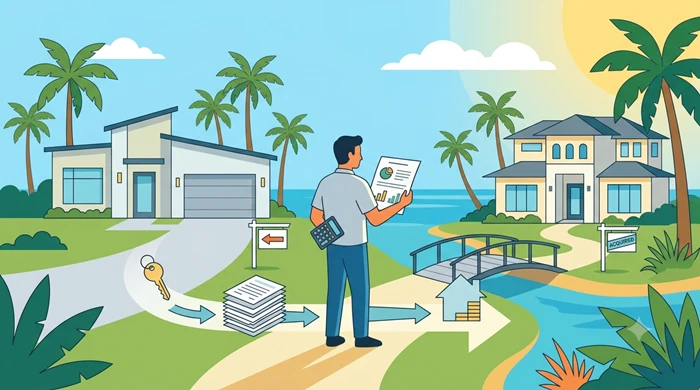
Buying a second home in South Florida before selling your primary residence can be an attractive strategy if you want to move into a new property without giving up your current home first. But the financing side requires careful planning, especially when you are considering a home equity line of credit, managing two housing payments, and timing the sale of your existing property.
For homeowners with enough equity, borrowing against the primary residence can potentially provide funds for a down payment or purchase expenses on another property. The key is understanding how the loan works, how much you can comfortably borrow, and what happens if your current home takes longer to sell than expected.
Key Takeaways
-
Home equity can potentially help fund the purchase of a second South Florida property.
-
Buying before selling gives you more time to choose and move into your next home.
-
Two mortgage obligations can create significant cash-flow pressure if the sale is delayed.
-
A clear repayment and home-sale strategy is essential before borrowing.
Can You Buy a Second Home Before Selling Your Primary Residence?
Yes, it is possible to buy a second home before selling your current property. The challenge is qualifying for the new purchase while you still have an existing mortgage and other financial obligations.
Lenders generally look at your income, credit profile, existing debts, available assets, and ability to handle the new payment. If you are borrowing against your current home, they may also consider the amount of equity you have built up.
This strategy can make sense when your primary residence has substantial equity and your overall finances can support the temporary overlap.
However, buying first should not be viewed simply as a way to avoid selling. You need a realistic plan for carrying both properties until the original home closes.
How Home Equity Can Help With a Second-Home Purchase
A home equity line of credit, commonly called a heloc, allows qualified homeowners to borrow against available equity in their existing property.
Unlike a traditional mortgage that provides one lump sum, this type of credit typically gives you access to funds up to an approved limit. Depending on the lender and loan terms, you may be able to use the available funds for a down payment, closing costs, renovations, or other eligible expenses.
For example, suppose your South Florida home is worth $600,000 and you have a $300,000 mortgage balance. You may have significant equity, but that does not automatically mean you can borrow the entire difference.
Lenders generally apply their own equity and underwriting requirements. Your income, credit, debt obligations, property value, and existing mortgage all matter.
Understanding the Cost Before You Borrow
Before taking out additional debt, look beyond the initial amount you can access.
Heloc rates can affect your monthly cost, particularly when the borrowing rate changes over time. This makes it important to understand whether the rate is fixed, variable, or subject to other adjustments.
You should also account for your existing mortgage, the new property’s financing, property taxes, insurance, maintenance, utilities, and potential association fees.
A homeowner who focuses only on the amount available to borrow can underestimate the actual monthly cost of owning two properties.
Using Equity for the Down Payment
One of the main reasons homeowners consider this approach is to access cash without immediately selling their primary residence.
For example, you might find a South Florida property that fits your long-term plans while your current house is still on the market. Instead of waiting for the sale to close, available equity could potentially provide part of the funds needed for the next purchase.
The strategy can be particularly useful when the timing of the two transactions does not line up.
However, borrowing against your primary residence means the existing property is tied to the additional debt. That makes the repayment plan just as important as the purchase plan.
What If You Plan to Sell Your Current Home Soon?
If you expect to sell your primary residence shortly after purchasing the next property, the additional borrowing may be intended as temporary financing.
That can work when the expected sale proceeds are sufficient to repay the balance and you have enough cash reserves to manage the period between transactions.
But real estate transactions do not always happen on schedule. A property can remain on the market longer than expected, negotiations can change, inspections can uncover issues, or a buyer’s financing can fall through.
Before purchasing, ask yourself whether you could comfortably manage the additional debt if your home took several months longer to sell.
If the answer is no, the strategy may expose you to unnecessary financial pressure.
How Rising Rates Can Affect Your Buying Decision
Financing conditions can influence whether buying before selling makes financial sense. When borrowing costs rise, monthly payments can become more expensive and buyers may have less purchasing power.
If you are evaluating the broader market, it is worth understanding how rising interest rates are affecting Florida home buyers.
This is especially important when your plan involves several layers of financing. Even a purchase that looks affordable at first can become difficult if your total monthly obligations leave little room for unexpected expenses.
Should You Use Equity to Buy a Second Home?
There is no universal answer. The right choice depends on your equity, income, savings, existing debt, expected sale price, and the property you intend to purchase.
Some homeowners use this strategy because they want to avoid making a rushed sale. Others may want to secure a property before listing their current residence.
If you are considering using heloc to buy second home, compare the potential benefits with the risks before making an offer.
A good starting point is to calculate the total monthly obligations after the purchase rather than focusing only on the new property’s mortgage.
Buying a Second Home While Keeping Your Primary Residence
The phrase buy second home can mean different things depending on your circumstances.
If the new property will become your primary residence after you sell the current one, your financing situation may differ from purchasing a property that you intend to keep as a vacation or investment home.
That distinction matters because lenders can apply different underwriting requirements depending on how the property will be used.
Before making an offer, discuss the intended occupancy and financing structure with your lender. Do not assume that a loan designed for one type of property can automatically be used for another.
What About a HELOC Loan for the Purchase?
A heloc loan can provide flexibility because you may be able to draw funds as needed instead of taking a single lump sum.
However, flexibility does not eliminate the obligation to repay what you borrow. You should understand the draw period, repayment period, interest calculation, minimum payments, fees, and potential rate changes.
It is also worth asking what happens if your primary residence does not sell within your expected timeframe.
If your entire strategy depends on using the proceeds from the sale to clear the balance, having a backup plan can make the difference between a manageable transition and a stressful financial situation.
Consider the South Florida Property Itself
The financing decision should not overshadow the property you are buying.
South Florida offers everything from inland suburban homes to condos, townhomes, luxury properties, and waterfront residences. Each category can come with different ownership costs and considerations.
For buyers considering a renovation project, it can also help to understand are south florida fixer-uppers still worth buying before committing to a property that needs significant work.
Likewise, buyers interested in coastal properties should examine more than the purchase price. The cost of buying a waterfront home in Florida can include expenses that are easy to overlook during the initial search.
Build a Complete Financial Plan
Before applying for additional financing, create a simple side-by-side budget.
List your current mortgage payment, estimated new mortgage payment, property taxes, insurance, association fees, utilities, maintenance costs, and debt payments.
Then add a realistic estimate of the costs associated with selling your current home.
You can also use a heloc payment calculator to estimate potential payments at different borrowing amounts and rates. Treat the result as an estimate rather than a guarantee, since actual lender terms can vary.
Most importantly, maintain an emergency reserve. Buying before selling reduces your margin for error because you are temporarily responsible for more than one property.
Have a Clear Exit Strategy
The strongest version of this strategy has a defined exit plan.
If the primary residence is being sold, determine when you will list it, what price range is realistic, how much equity you expect to receive, and how the sale proceeds will be used.
If your goal is to sell your house fast, make sure your expectations about timing and price are realistic before depending on the sale proceeds to repay borrowed funds.
Selling quickly and selling for the highest possible price are not always the same objective. Your preferred approach should reflect your financial situation and how urgently you need to reduce the outstanding debt.
Could a Rent-Back Agreement Help?
There may also be situations where you sell your current property but need additional time before moving into your next home.
A rent-back arrangement can sometimes provide a transition period after closing, depending on the buyer, contract terms, lender requirements, insurance, and local considerations.
If this is relevant to your situation, learn more about how a rent back agreement works after selling a house in Florida.
The arrangement should be documented properly rather than treated as an informal agreement between buyer and seller.
Common Mistakes to Avoid
Borrowing the Maximum Available
Just because a lender approves a certain amount does not mean you should borrow it. Leave room in your budget for repairs, insurance increases, taxes, and unexpected expenses.
Assuming Your Home Will Sell Quickly
A strong local market does not guarantee that every property will sell immediately. Base your plan on a conservative timeline.
Ignoring Total Ownership Costs
The mortgage payment is only one part of the cost of owning a property. Insurance, taxes, maintenance, utilities, and association charges can materially change the monthly budget.
Failing to Consider Your Long-Term Plan
Buying another property before selling can solve a short-term timing problem while creating a long-term financial issue. Make sure the new property fits your broader housing goals.
Final Thoughts
Using equity from your primary residence to purchase another South Florida home before selling can give you greater flexibility during a move. It may allow you to secure the right property without rushing the sale of your existing home.
But the strategy works best when supported by sufficient equity, reliable income, adequate cash reserves, and a realistic selling timeline.
Before moving forward, compare the total cost of carrying both properties, understand the terms of the additional financing, and create a backup plan if your current home takes longer to sell. A carefully structured plan can make the transition much smoother.
Frequently Asked Questions
1. Can I buy another home before selling my current home?
Yes, qualified buyers can purchase another property before selling their existing home if they can meet the lender’s financial requirements.
2. Can home equity help fund a second-home purchase?
Yes, eligible homeowners may be able to access available equity to help cover a down payment or other purchase-related expenses.
3. Is buying before selling financially risky?
It can be if you cannot comfortably handle both properties while waiting for your current home to sell.
4. Should I borrow the maximum amount available?
No, borrowing less than the maximum can provide greater financial flexibility and reduce monthly repayment pressure.
5. What should I do if my current home does not sell quickly?
Have sufficient reserves or an alternative repayment strategy so you are not entirely dependent on an immediate sale.