
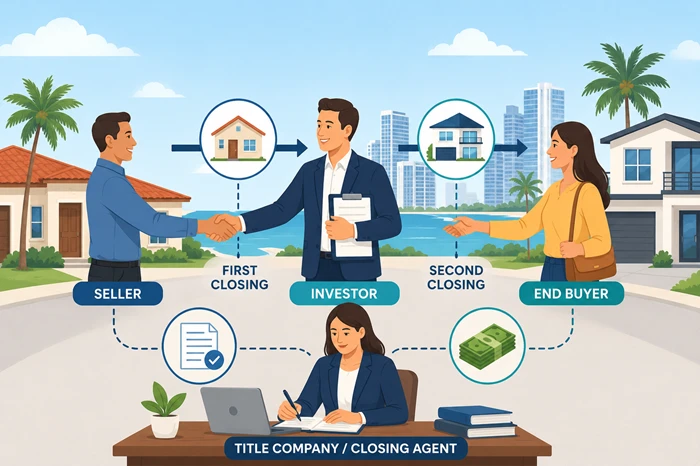
Buying and selling property at nearly the same time can create a fast-moving transaction, especially in South Florida’s competitive real estate environment. A double closing allows an investor to purchase a property and then resell it to a final buyer as part of a coordinated closing process. Because multiple parties, funds, contracts, and closing requirements must line up, careful planning is essential.
Key Takeaways
-
Coordinate the seller, buyer, title company, lender, and closing attorney early.
-
Confirm that both transactions can legally and financially close as planned.
-
Keep contracts, funding, documents, and timelines organized.
-
Use experienced professionals familiar with South Florida investment transactions.
What Is a Double Closing?
A double closing is a transaction structure in which an investor purchases a property from one seller and then sells that property to another buyer, usually within a short period.
The first transaction is commonly called the A-B transaction, involving the original seller and investor. The second is the B-C transaction, involving the investor and end buyer.
The investor temporarily becomes the property owner between the two closings. This differs from an assignment, where the investor transfers contractual rights to another buyer rather than taking ownership of the property.
For anyone researching what is double closing in wholesale real estate, the key point is simple: the investor is completing two separate property sales rather than assigning the original purchase agreement.
Why Timing Matters in South Florida
Timing is one of the biggest challenges when coordinating these transactions. Both closings need to happen in the correct sequence, and delays in the first transaction can affect the second.
South Florida also has its own considerations, including title requirements, property condition, insurance concerns, municipal requirements, and lender timelines.
A transaction may look straightforward on paper but become complicated when one party is waiting for documents, payoff information, title clearance, or financing approval.
That is why the closing team should be involved before the contracts are signed whenever possible.
Step 1: Get Both Transactions Organized Early
Start by identifying every party involved in both sides of the transaction.
Typically, this includes:
-
Original property owner
-
Investor
-
End buyer
-
Title company or closing attorney
-
Real estate agents, if involved
-
Lenders or private funding sources
-
Insurance professionals
-
Other professionals needed to resolve title or property issues
Create a simple timeline showing when each document, inspection, financing approval, title requirement, and closing must occur.
This gives everyone a shared reference point and makes potential delays easier to identify.
Step 2: Review Both Purchase Agreements Carefully
The contracts are the foundation of the entire transaction. The investor should understand the purchase price, closing date, contingencies, deposits, title provisions, and any other obligations before moving forward.
The first contract should support the intended resale timeline. At the same time, the second agreement should provide enough certainty that the end buyer is ready and able to close.
Investors should avoid assuming that one transaction automatically guarantees the other. Each contract represents a separate legal obligation.
For transactions involving unusual terms, an experienced Florida real estate attorney can explain the applicable requirements and help identify potential problems before closing.
Step 3: Confirm the Closing Company Can Handle Both Sides
Not every closing office handles investor transactions in the same way. Before committing to a closing date, confirm that the title company or attorney understands the structure of the transaction.
Ask practical questions such as:
-
Can the office coordinate both closings?
-
Can the second transaction close shortly after the first?
-
What documents are required from each party?
-
How will purchase funds be handled?
-
What title issues need to be resolved?
-
What happens if one closing is delayed?
A closing professional who understands investment transactions can make the process significantly easier.
Step 4: Verify Funding Before Setting the Final Date
Funding is another critical part of the process.
The investor needs to know exactly how the first purchase will be funded and whether the second transaction provides the expected proceeds. Depending on the circumstances, funding may come from the investor’s own capital, private financing, transactional funding, or another permitted source.
Do not assume that proceeds from the resale will automatically be available without confirming the closing company’s procedures.
If financing is involved, verify lender requirements early. Last-minute funding problems can cause one or both transactions to collapse.
Step 5: Make Sure the Title Is Clean
Title problems can stop a transaction even when everyone else is ready to close.
The title company will generally examine ownership records, liens, judgments, mortgages, taxes, and other matters affecting the property.
Any issue that appears during the title search should be addressed as soon as possible. Waiting until the scheduled closing date creates unnecessary pressure.
In South Florida, investors should also pay attention to property-specific concerns that could affect the transaction, including outstanding municipal matters or other recorded issues.
The earlier these problems are discovered, the more time there is to resolve them.
Step 6: Coordinate the Closing Dates
The two closings need to be carefully scheduled.
The purchase from the original seller normally occurs first, followed by the resale to the end buyer. However, the exact timing and funding structure should be confirmed with the closing professional rather than assumed.
Build some flexibility into the schedule when possible. A document arriving late, a lender requesting additional information, or a title issue requiring clarification can quickly affect the entire timeline.
Everyone should know:
-
When the first closing is scheduled.
-
When the second closing is scheduled.
-
Who must provide documents.
-
How funds will move.
-
What conditions must be satisfied before each closing.
Clear communication prevents many avoidable problems.
Step 7: Keep Communication in One Place
Multiple phone calls and separate email conversations can create confusion when a transaction is moving quickly.
Choose a primary communication method and make sure the key participants receive important updates.
A simple transaction checklist can track:
-
Signed contracts
-
Earnest money deposits
-
Title search
-
Payoff statements
-
Identification documents
-
Closing disclosures or settlement statements
-
Insurance requirements
-
Financing documents
-
Wire instructions
-
Final closing approval
Never rely on an unverified email or text message for wire instructions. Confirm payment details directly with the closing professional using a trusted contact method.
Common Mistakes to Avoid
Waiting Too Long to Involve the Closing Team
One of the biggest mistakes is treating the closing company as someone who only needs to become involved at the end.
Early involvement allows the team to identify title, documentation, funding, and scheduling problems before they become urgent.
Assuming the End Buyer Is Fully Ready
A signed agreement does not necessarily mean the buyer is ready to close.
Confirm financing, required documentation, inspections, and other conditions well before the scheduled date.
Ignoring Property Problems
Investors should understand the condition and legal status of the property before committing to a transaction.
For example, knowing how to sell a property with unpermitted work in Florida can be important when renovations or additions were completed without the required approvals.
Similarly, investors and homeowners can benefit from understanding what to fix before selling your home when deciding which property issues deserve attention before listing or selling.
Using Generic Documents Without Legal Review
Searching for a double closing contract template may provide a starting point for understanding typical paperwork, but contracts should not be copied blindly.
Florida transactions can involve specific legal and title considerations. An attorney should review documents when the circumstances require legal advice.
Should You Use a Realtor?
A real estate agent is not always necessary for an investor transaction, but professional representation can be useful depending on the property and strategy.
An investor who is trying to determine the pros and cons of using a realtor in South Florida should consider factors such as marketing exposure, negotiation support, commissions, local market knowledge, and the complexity of the transaction.
The right choice depends on the circumstances rather than a one-size-fits-all rule.
How Real Estate Investors Can Prepare
Successful real estate investing requires more than finding a property at an attractive price.
Investors need to understand the numbers, verify the transaction structure, evaluate the exit strategy, and communicate clearly with everyone involved.
Before moving forward, calculate the expected purchase price, closing costs, financing expenses, resale price, taxes, commissions if applicable, and other transaction expenses.
The goal is to understand the potential profit before signing agreements rather than discovering unexpected costs at closing.
When speed is important, some investors may also explore services designed to help owners sell your house fast while keeping the transaction process straightforward.
How to Coordinate the Transaction From Start to Finish
A practical sequence looks like this:
1. Find and evaluate the property.
Review the property’s condition, value, title status, and potential resale price.
2. Negotiate the purchase.
Make sure the contract terms support the intended transaction timeline.
3. Identify the end buyer.
Confirm the buyer’s interest, financing, and ability to meet the expected closing schedule.
4. Contact the closing professional.
Provide both contracts and explain the intended structure.
5. Complete title and document review.
Resolve liens, title defects, payoff issues, and documentation problems.
6. Confirm funding.
Make sure the money needed for the first transaction and the expected proceeds from the second are properly coordinated.
7. Schedule both closings.
Allow enough time for documents and funding to move through the closing process.
8. Complete the purchase and resale.
The investor acquires the property and then completes the resale according to the approved closing structure.
This process is the practical foundation of double closing real estate transactions.
Understanding the Local Market
South Florida has a diverse property market that includes single-family homes, condos, investment properties, rental properties, and redevelopment opportunities.
Market conditions can influence how quickly a property can be resold and how much room an investor has between acquisition and resale.
Understanding the local real estate market is therefore important before entering a short-term transaction.
Investors should research comparable properties, recent sales, buyer demand, property-specific expenses, and potential holding costs.
A strong purchase price alone does not guarantee a successful transaction. The resale strategy matters just as much.
Final Thoughts
Coordinating two connected property transactions requires organization, realistic timing, reliable funding, and strong communication.
The most important step is to involve the closing professional early and make sure everyone understands the sequence of events. Investors should also work with qualified legal and financial professionals when the transaction involves complex contractual, funding, or title issues.
For homeowners considering a quick sale, understanding the available selling options can also help determine whether a traditional listing or an investor-focused approach makes more sense. In some situations, learning sell your house in 7 days strategies can provide useful context when evaluating different timelines.
With careful preparation, clear contracts, verified funding, and professional guidance, South Florida investors can reduce unnecessary surprises and keep the transaction moving toward closing.
FAQs
What is a double closing?
It is a transaction structure where an investor purchases a property and then resells it to another buyer through separate closings.
Is a double closing legal in Florida?
It can be legal when properly structured and completed in compliance with applicable Florida laws and closing requirements.
How quickly can both closings happen?
They may occur on the same day or close together, depending on funding, title, contracts, and the closing professional’s procedures.
Does the investor need to own the property?
In this structure, the investor generally takes ownership through the first transaction before completing the resale.
Should an attorney review the transaction?
Legal review can be valuable, particularly when contracts, funding arrangements, title issues, or unusual transaction terms are involved.