
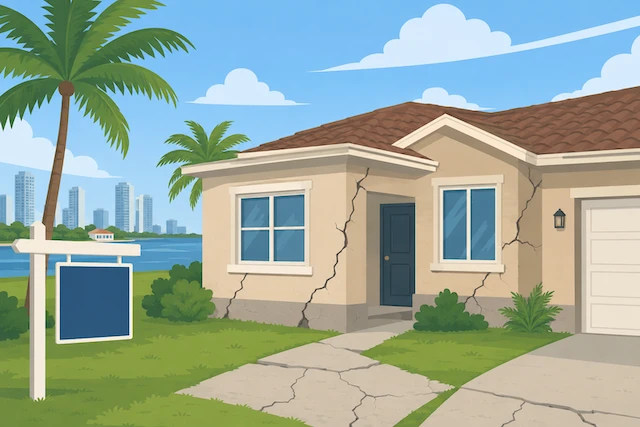
Foundation issues are one of the most anxiety-inducing discoveries a homeowner can face. Whether a home inspector flagged a crack during a failed sale or you have watched a door frame slowly warp over the years, foundation problems tend to trigger one question above all others: can I still sell this house?
The short answer is yes — but the path you take matters enormously. In Florida, foundation issues come with their own set of challenges thanks to the state’s unique geology, disclosure laws, and buyer pool. This guide walks you through everything you need to know before putting your home on the market.
Why Foundation Problems Are Common in Florida
Florida’s soil and climate create conditions that are particularly hard on foundations. Much of the state sits on sandy, porous soil or limestone bedrock — neither of which provides the stable, uniform base that concrete foundations need to remain level over time.
A few factors make Florida especially prone to foundation movement:
-
Sinkholes: Florida has more sinkholes than anywhere else in the United States. When the limestone beneath a property dissolves, the ground above can shift, crack, or even collapse.
-
Expansive clay pockets: Clay-heavy soils absorb and release water with the seasons, pushing and pulling against foundations with each rainfall cycle.
-
Moisture saturation: High rainfall, flooding, and a shallow water table keep the ground around foundations perpetually wet, softening the soil and eroding support over time.
-
Poor compaction at construction: In some newer developments, builders rushed soil compaction during construction, leaving foundations vulnerable to settlement years down the line.
Understanding why the problem exists helps you assess its severity — and communicate honestly with prospective buyers.
Types of Foundation Problems You Might Be Dealing With
Not every foundation crack signals disaster. The severity ranges from cosmetic to structural, and that distinction changes your options significantly.
Minor Settling
Hairline cracks in concrete block walls or brickwork are common and often cosmetic. All homes settle to some degree over time, and minor, stable cracking that has not changed in years is generally manageable and easy to disclose.
Significant Settlement or Differential Movement
When one part of the foundation sinks more than another, you get differential settlement. This produces sloping floors, sticking doors, and diagonal cracks at the corners of windows and door frames. This is a more serious concern and typically requires professional remediation.
Structural Failure
Active sinking, large horizontal cracks in the foundation wall, bowing walls, or cracking that has progressed rapidly are red flags pointing to structural failure. These require an engineering assessment and significant repair work before most buyers will consider the property.
Sinkhole Activity
If a sinkhole is confirmed on the property — even a minor one — it triggers specific legal and insurance consequences in Florida that go well beyond typical foundation repair scenarios.
What Florida Law Says About Disclosure
Florida operates under a legal doctrine established in Johnson v. Davis, which requires sellers to disclose any facts they know that materially affect the value or desirability of the property. Foundation problems fall squarely within that obligation.
You are legally required to disclose:
-
Known structural defects, including foundation cracks, movement, or subsidence
-
Any previous repairs to the foundation, even if the issue was fully resolved
-
Known or suspected sinkhole activity, including any insurance claims made against the property in the past
Failing to disclose known defects can expose you to litigation well after closing. Florida courts take seller disclosure seriously, and buyers who discover concealed defects have successfully sued sellers for damages.
If you have had a home inspection that identified foundation issues, or if you previously filed an insurance claim related to the foundation, that information must go in your disclosure. Attempting to hide it is both illegal and counterproductive — buyers typically hire their own structural engineers, and problems rarely stay hidden during due diligence.
For a broader look at seller obligations across South Florida, it is worth reviewing what Fort Lauderdale home seller disclosures require — those obligations are closely mirrored throughout the region.
What Foundation Problems Do to Your Home’s Value
The impact on value depends on the type and severity of the damage, the cost to remedy it, and how your local market perceives structural issues.
In a strong seller’s market, some buyers will still make offers on homes with foundation problems if the price reflects the condition. In a softer market, structural defects push traditional buyers away faster than almost anything else.
Here is a rough framework for understanding the financial impact:
-
Minor cosmetic cracks: Often minimal impact if disclosed and demonstrably stable
-
Significant settlement requiring repair: Buyers typically expect a discount equal to 1.5x to 2x the repair cost to account for hassle, risk, and uncertainty
-
Active movement or confirmed sinkhole involvement: Value can drop sharply, and conventional financing almost always becomes unavailable
When conventional financing drops out of the picture, your buyer pool shrinks to cash buyers and investors. Most lenders — FHA, VA, and conventional — will not approve mortgages on properties with active structural defects.
Should You Repair the Foundation First?
It is tempting to fix the problem before listing. But the numbers do not always support it. Foundation repair in Florida typically costs between $4,000 and $25,000 for moderate issues and can run significantly higher for sinkhole work or full underpinning projects.
The challenge is this: even after repairs, many buyers remain cautious about the property’s history. You will still need to disclose the prior issue, and some buyers will walk away regardless of what was done. You spend $15,000 on repairs and still end up negotiating a meaningful discount on the other side.
The decision to repair or sell as-is comes down to your timeline, your cash position, and how much certainty you need. The post on selling as-is versus fixing your home breaks down this trade-off in detail — and in many cases, the as-is route puts more money in the seller’s pocket once you account for repair costs, carrying costs during the work, and the uncertainty of whether the repairs actually shift the final price.
What not to fix when selling a house as-is is also worth reading before you commit to any work — it covers the repairs where sellers routinely spend money without improving their net outcome.
Selling a Home with Foundation Issues on the Open Market
If you pursue a traditional listing, here is what to expect:
Buyer hesitation is real. Many buyers will see foundation issues in the disclosures and move on without requesting a showing. This narrows your pool significantly before you have even had a conversation.
Inspections become complicated. Any interested buyer will bring in a structural engineer alongside a standard home inspector. These reports can take weeks and often surface additional concerns.
Financing contingencies add risk. Even if a buyer wants the home, their lender may refuse to approve the loan if the appraiser flags active structural concerns. This can kill deals at the last minute after you have already spent weeks under contract.
Repair negotiations start over. Buyers who stay in the process will typically come back with repair credits or price adjustments after inspections. You are negotiating the condition again from scratch.
This does not make a traditional listing impossible — but it does mean going in with realistic expectations. Pricing it accurately from day one is critical. An overpriced home with foundation issues sits on the market, and a stigmatised listing that lingers only damages your negotiating position further.
The Case for Selling to a Cash Buyer
For homeowners with foundation problems, a direct cash sale often produces the cleanest result. Cash buyers and real estate investors purchase properties in as-is condition — they are not relying on mortgage approval, and structural issues do not carry the same emotional weight for them that they do for owner-occupiers.
The process looks very different from a traditional listing:
-
No inspection demands or repair contingencies
-
No financing risk killing the deal weeks after going under contract
-
Closing timelines as short as two weeks
-
You disclose what you know, accept the offer, and move on
The trade-off is that cash offers come in below retail market value. But once you factor in what you would spend on repairs, the months of carrying costs while the property sits, and the probability of deals falling through at the financing stage, many sellers find the cash route produces a comparable or even better net outcome.
How cash home buyers determine their offers in South Florida explains exactly how these calculations work so you can evaluate any offer you receive with clear eyes.
Before signing anything, it also pays to understand the red flags to watch for when selling to an investor. Not all cash buyers operate with the same level of transparency, and a few straightforward checks protect you from lowball tactics dressed up as generosity.
What the Process Looks Like Step by Step
If you decide to pursue a cash sale on a home with foundation problems, here is a typical sequence:
-
Contact a cash buyer and describe the property’s condition honestly, including everything you know about the foundation
-
Schedule a walkthrough — a reputable buyer will assess the property in person before making an offer
-
Receive an offer — this usually arrives within 24 to 48 hours of the walkthrough
-
Review the terms carefully — check the offered price, closing timeline, and any conditions before signing
-
Sign the purchase agreement and move to title
-
Close — cash transactions typically complete in 10 to 21 days once title work is clear
No staging, no open houses, no inspector negotiations dragging on for weeks. The whole process is built around giving sellers certainty, which matters a great deal when a foundation issue has already introduced enough uncertainty into your situation.
Insurance Considerations
If your foundation problem is linked to sinkhole activity, insurance becomes part of the equation. Florida insurers are required to offer sinkhole coverage as an add-on to standard policies, but many carriers have pulled back from high-risk areas, and claims can be contentious.
If you have an active or resolved sinkhole insurance claim, that information must be disclosed to buyers. Some cash buyers specialize in sinkhole properties and can still make competitive offers — but transparency from the start protects everyone involved.
If you are weighing whether to file a claim before selling, the post on fire or water damage — claim insurance or sell as-is covers the broader logic of that decision in ways that apply equally well to structural damage scenarios.
Common Questions From Sellers
Will anyone buy a house with a cracked foundation in Florida?
Yes. Cash buyers and investors regularly purchase homes with foundation issues throughout South Florida. The keys are honest disclosure and realistic pricing.
Do I need to repair the foundation before selling?
No. You can sell as-is provided you disclose known defects. Repairs can actually reduce your net proceeds when the full cost and carrying-time are factored in.
Can buyers get a mortgage on a house with foundation problems?
Most conventional lenders will not approve financing on a property with active structural defects. This limits your buyer pool to cash buyers unless repairs are completed and signed off by a licensed structural engineer.
How much will foundation issues reduce my sale price?
It varies by severity. Significant foundation repairs in Florida often reduce the effective sale price by $15,000 to $40,000 or more, depending on scope and market conditions.
Moving Forward
Foundation problems are serious, but they do not trap you in a property you cannot sell. Florida’s cash buyer market is active, and experienced investors work with structural issues regularly — it is not the rare exception it might be in other states.
The most important first step is getting clarity on exactly what you are dealing with. Have a structural engineer give you an honest, written assessment. Once you know the scope, you can make an informed decision about whether repairs make financial sense or whether selling as-is to the right buyer is the smarter move for your situation.
If you are ready to explore your options, Supreme Royalty Investments buys homes as-is throughout South Florida — foundation issues, structural concerns, and all. There is no pressure and no obligation. You will have a clear offer in hand so you can decide what is right for you.